 Swiss Economicblogs.org

My interview with Claudia Gnehm, published in Tamedia outlets, together with the accompanying article in Finanz und Wirtschaft, generated many responses from readers. Here are the comments that received the most support from other readers: Most-liked comments on interview: #1 Dirk Niepelt betont in diesem wohltuend klaren Artikel, dass das Verursacherprinzip als Richtschnur auch und gerade für Banken und für die UBS gilt. Es kann nicht sein, dass sich eine systemrelevante Bank sehr...
Read More »“Warum Banken gegen mehr Eigenkapital kämpfen – und wer davon profitiert” (Why Banks Oppose Higher Capital—and Who Benefits), FuW, 2026

Finanz und Wirtschaft online. 10 August 2026. PDF of online article. Also published in print on 12 August 2026; PDF.
Read More »Interview on Bank Capital Requirements, Tamedia Outlets, 2026
“Ob Bäcker oder Grossbank – wer Gewinne erzielt, muss im Krisenfall auch Verluste tragen,” (Whether Bakery or Global Bank: Those Who Earn the Profits Must Also Bear the Losses). Interview published in Tagesanzeiger online, Der Bund online, Berner Zeitung online, Basler Zeitung online, and elsewhere. 7 August 2026. PDF of hardcopy.
Read More »“Liquidity Crisis Support made in Switzerland and the Too-big-to-fail Subsidy,” VoxEU, 2025
VoxEU, June 30, 2025. With Cyril Monnet and Remo Taudien. HTML. From the text: To judge the incentive effects of a public liquidity backstop framework, ideally one would assess its contribution to the overall too-big-to-fail subsidy. However, isolating this contribution is empirically challenging. To estimate the broader too-big-to-fail subsidy, we conduct a quantitative analysis based on the industry-standard CreditGrades framework (Merton 1974, Finkelstein et al. 2002). Using publicly...
Read More »“Report by the Parliamentary Investigation Committee on the Conduct of the Authorities in the Context of the Emergency Takeover of Credit Suisse”
The report (in German). From the press release: The Parliamentary Investigation Committee (PInC) attributes the Credit Suisse crisis to years of mismanagement at the bank. It is critical of FINMA’s relaxation of capital requirements and regrets the lack of effectiveness of its banking supervision. The PInC also criticises the hesitant development of the TBTF legislation and identifies shortcomings in the flow of information between authorities. It does not find any misconduct on the part...
Read More »“Retail CBDC and the Social Costs of Liquidity Provision,” VoxEU, 2023
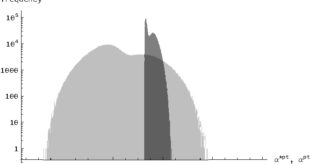
VoxEU, September 27, 2023. HTML. From the conclusions: … it is critical to account for indirect in addition to direct social costs and benefits when ranking monetary architectures. … the costs and benefits we consider point to an important role of central bank digital currency in an optimal monetary architecture unless pass-through funding is necessary to stabilise capital investment and very costly. … the interest rate on CBDC should differ from zero and from the rate on reserves. From...
Read More »“Why the Digital Euro Might be Dead on Arrival,” VoxEU, 2023
With Cyril Monnet. VoxEU, August 10, 2023. HTML. … promoting the digital euro requires an aggressive marketing strategy because private incentives for adoption are limited. However, the pursuit of such an aggressive approach is unlikely as this runs counter to the ECB’s fourth, implicit objective of protecting banks’ existing business model. This is problematic and could turn the project into a significant missed opportunity, for the potential social benefits of the digital euro...
Read More »“Der digitale Euro könnte zur Totgeburt werden (Digital Euro, Dead on Arrival?),” NZZ, 2023
Neue Zürcher Zeitung, July 5, 2023. PDF. HTML. Ein digitaler Euro könnte den Wettbewerb fördern, mehr Transparenz schaffen und das Too-big-to-fail-Problem entschärfen. Mit ihrer Minimalvariante aber priorisiert die EZB das Ziel der Bewahrung des Status quo im Bankensystem.
Read More »Banking crisis: The new bailout strategy
Part II of II To be fair, it is true, this time is different. Indeed, this time the rescue plan for the bust banks is not comparable to what we saw in 2008. In the US, the guarantee for deposits up to $250.000 comes from funds that are maintained by participating banks and not from the taxpayer. The official answer to how they’re going to pay everyone back is also plausible and possible: Some, or even most, of the money can and will be recovered from winding down the failed bank’s...
Read More »Banking crisis: The new bailout strategy
Part II of II To be fair, it is true, this time is different. Indeed, this time the rescue plan for the bust banks is not comparable to what we saw in 2008. In the US, the guarantee for deposits up to $250.000 comes from funds that are maintained by participating banks and not from the taxpayer. The official answer to how they’re going to pay everyone back is also plausible and possible: Some, or even most, of the money can and will be recovered from...
Read More »