

Friday , August 14 2026
Home / Investec
Investec

Investec

Investec is a distinctive Specialist Bank and Asset Manager. We provide a diverse range of financial products and services to our niche client base.

Articles by Investec

Swiss home battery sales are booming. The maths still doesn’t add up

7 days ago

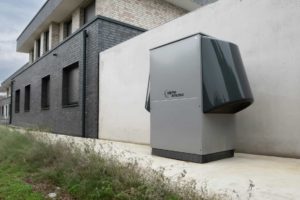
Switzerland’s residential battery market is growing fast. Around half of new photovoltaic installations are now paired with storage, according to Swissolar. Falling battery prices, lower payments for surplus solar power and the prospect of more flexible electricity tariffs are all helping to drive demand. But popularity should not be confused with profitability.

In Switzerland, solar power already supplies about 14% of electricity demand. That creates a new problem: what to do with the surplus, when on sunny days generation exceeds consumption. Batteries offer one answer. More owners of single-family homes are pairing photovoltaic panels with storage, allowing excess power generated during the day to be used later. Used intelligently, these batteries can attenuate peaks in demand

Read More »

Swiss public-transport fares to rise by less than expected

7 days ago

Swiss public-transport fares will rise by an average of 3.6% in December 2026, less than the 3.9% increase originally planned. The reduction follows negotiations between the industry and Switzerland’s price regulator.

@ Alliance SwissPass

The price of a second-class GA travelcard, which provides unlimited travel on much of the Swiss public-transport network, will rise by CHF 100 to CHF 4,095. Alliance SwissPass, the industry body, had initially proposed an increase of CHF 200. A first-class GA will cost CHF 6,770, up from CHF 6,520. The original proposal was CHF 6,850. The increase has thus been cut from CHF 330 to CHF 250.

Alliance SwissPass said the higher fares were still needed to offset inflation and rising costs for staff, energy, materials and maintenance.

Other

Read More »

Mental illness remains the leading cause of disability-welfare claims in Switzerland

14 days ago

The number of people receiving vocational-rehabilitation support through Switzerland’s disability-insurance system rose again in 2025. Mental illness remained the leading cause of disability, especially among young people.

Photo by Ruslan Rozanov on Pexels.com

Some 61,000 people received vocational-rehabilitation support, the Federal Social Insurance Office (FSIO) said on Monday. That was 3,300 more than in 2024 and more than three times as many as in 2008.

Spending on these measures reached CHF 979m, nearly 10% more than the CHF 892m recorded in 2024. A further 37,000 people received daily allowances, at a total cost of CHF 780m.

Mental illness accounted for 55% of cases among people receiving rehabilitation support. Among teenagers and young adults, the share rose to 64%.

Read More »

How the Big Mac Index overstates the Swiss franc’s strength

14 days ago

For 40 years, The Economist has indulged in what it refers to as “burgernomics”: a worldwide comparison of the price of a Big Mac. The McDonald’s Big Mac is remarkably consistent wherever you eat it, so you might expect its price to be consistent too. But it is not—and, according to the publisher, that reveals something about the true value of currencies. Perhaps.

Photo by Valeria Boltneva on Pexels.com

As usual, Switzerland’s Big Mac is the most expensive, costing US$ 9.04 (CHF 7.30), 45% more than the same burger in the US, which costs US$ 6.22. The most affordable double layered burgers are found in Indonesia (US$ 2.38).

However, the Swiss-US price differential may not be entirely attributable to the exchange rate. The Economist provides a breakdown of what goes into the

Read More »

Swiss rail – squeezing more people onto ever busier trains

14 days ago

Switzerland’s railways are carrying more people than ever. In the second quarter of 2026 passengers travelled 6.3bn kilometres by train, an increase of 5.2% from a year earlier, reported Litra. That surpassed the previous record, set in the final quarter of 2025, by nearly 200m passenger-kilometres, the collective distance travelled by passengers.

© David Taljat | Dreamstime.com

This is good news for a country seeking to accommodate population growth without filling roads with more traffic. Yet headline numbers can conceal as much as they reveal. Passenger traffic grew far faster than railway capacity. Operators ran 53.24m train-path kilometres—a measure of train movements—during the quarter, just 0.9% more than a year earlier and almost unchanged from the preceding three months. In

Read More »

Moving to France – a cheaper life across the border

14 days ago

While Switzerland is debating how to curb immigration, some of its own residents are considering a move in the opposite direction. According to a survey commissioned by Comparis, a price-comparison website, nearly one-third of adults in French-speaking Switzerland could imagine moving to France. Some 4.2% are already looking for a home there—equivalent, by the company’s extrapolation, to roughly 92,000 people.

Photo by Toba Oduwaiye on Pexels.com

The attraction is clear. Seven in ten respondents describe rents or home purchase prices in their area as high. A quarter say housing consumes at least 36% of their household income; 8% spend more than half. In Geneva, half of respondents say housing costs are “very high”. The survey gives gives much lower figures for French-speaking Bern,

Read More »

America imposes new 12.5% tariff on Swiss goods

21 days ago

America has imposed new tariffs of 10% or 12.5% on selected imports from about 60 trading partners, including Switzerland. The White House says the countries concerned have failed to do enough to combat forced labour.

Photo by Polina Zimmerman on Pexels.com

The measures, announced on Thursday, took effect overnight. The European Union, Japan and Taiwan are also named in the American documents. Switzerland will generally face the higher rate of 12.5%, although some products will be exempt.The decision follows a ruling by America’s Supreme Court in late February that struck down many of the tariffs introduced by the president. Sector-specific duties on cars, steel, aluminium and copper were unaffected.

Swiss industry fears a competitive disadvantageSwissmem, which represents

Read More »

Swiss plans to tighten foreign property ownership divide opinion

28 days ago

The Swiss government’s proposal to tighten the Lex Koller, which restricts property purchases by foreigners, has exposed a sharp divide between political parties and business groups. Parties on the left and the Swiss People’s Party (UDC/SVP) argue that the reforms would close longstanding loopholes in the law, reported RTS. Business organisations and most centrist parties warn that the measures could deter investment and weaken Switzerland’s economic appeal.

Photo by Cadis Ioan on Pexels.com

Switzerland has long struggled with high real estate prices and an acute housing shortage. Roughly two thirds of the population rent and the rental vacancy rate was 1% in 2025. To help solve the problem, Switzerland restricts foreign ownership with a law known as Lex Koller. However, some claim

Read More »

Swiss firms set to win more F-35 work than expected

July 10, 2026

Switzerland’s purchase of F-35 fighter jets is expected to generate more business for Swiss companies than originally required, reported RTS. Under the procurement deal, the American manufacturer has agreed to place work with Swiss firms as partial compensation for the purchase. According to figures released by Armasuisse on Tuesday, these commitments now exceed the target set by the federal government.

Photo by Guy Seela on Pexels.com

The announcement is intended to demonstrate that the F-35 programme will benefit not only the Swiss Air Force but also domestic industry. Under the procurement agreement, offset business equivalent to 60% of the contract value—around $3bn—must be awarded to Swiss companies. Armasuisse says commitments now amount to 73% of the purchase price.

New

Read More »

Swiss workers miss out on a decade of economic growth

July 10, 2026

Real wage growth has slowed sharply for most Swiss workers over the past decade, leaving real disposable incomes stagnant or falling for nearly all households. According to a Swiss Trade Union Federation’s (SGB) 2026 report, only single people in the top 10% of the income distribution and families in the top 1% recorded an increase in real disposable monthly income between 2016 and 2025.

© Bartolomiej Pietrzyk | Dreamstime.com

The report finds that employees in the lower and middle parts of the wage distribution have seen little improvement in purchasing power over the past decade. Median real wages rose by only around 2% between 2014 and 2024, equivalent to about 0.2% a year after inflation. Lower-paid workers fared only slightly better. During the same period Switzerland enjoyed

Read More »
Unions launch referendum against a minimum-wage reform they describe as attack on women

July 3, 2026

Minimum wages are one of the most contentious issues in Swiss labour policy, exposing tensions between Switzerland’s federal government and the cantons over who should determine pay.

Photo by cottonbro studio on Pexels.com

Trade unions and left-wing parties have now launched a federal referendum against legislation that would give sectoral collective labour agreements1 precedence over cantonal minimum-wage laws. The reform, approved by parliament during its summer session, is an attack on low-paid workers, women and Swiss federalism, campaigners argue. The canton of Neuchâtel has also called for a referendum.

The legislation would allow minimum wage rates negotiated in collective labour agreements to override statutory minimum wages enacted by the cantons. Unions said the

Read More »

Higher health-insurance deductible wins backing on the right, not the left

June 26, 2026

Switzerland’s government is pressing ahead with plans to raise the minimum annual health-insurance deductible from CHF 300 to CHF 400, reports RTS. The proposal has exposed familiar political divisions: parties on the right and health insurers support it, while the left, trade unions and cities oppose it. The Centre Party and the cantons occupy a middle ground.

Photo by RDNE Stock project on Pexels.com

Under Switzerland’s compulsory health-insurance system, policyholders pay the first CHF 300 of annual medical costs themselves before insurers begin reimbursing expenses. Patients must then cover 10% of subsequent costs up to a capped amount. The government argues that increasing the deductible would strengthen personal responsibility and help curb healthcare spending.

The

Read More »

Swiss rent control initiative passes signature hurdle

June 26, 2026

This week, the Swiss Tenants’ Association submitted a popular initiative aimed at curbing rents after collecting more than 140,000 signatures.

Photo by Marcus Lenk on Pexels.com

The proposal would require rents to be reviewed automatically at regular intervals. If a review found rents to be too high, landlords would be obliged to reduce them. The initiative is backed by an alliance of left-wing parties, trade unions and advocacy groups, including the Socialist Party.

The association argues that housing costs have become an unsustainable burden for many households. Nearly 40% of tenants spend more than one-third of their income on rent, it says, making housing the largest expense for many families.

It also contends that rents have failed to fall despite lower interest rates

Read More »

Swiss government trims defence tax increase

June 26, 2026

The Swiss government has scaled back—but not abandoned—its plan to raise value-added tax (VAT) to finance higher defence spending.

In January the Federal Council proposed a temporary 0.8-percentage-point increase in the standard VAT rate to help fund Switzerland’s growing security needs. Following a public consultation, it has reduced the proposed rise to 0.5 percentage points. The levy would apply for 12 years rather than the originally proposed ten.

The government says the smaller increase strikes a better balance between strengthening national defence and limiting the burden on households and businesses. Nevertheless, it argues that the worsening security environment, pressure on the federal budget and the armed forces’ rearmament programme leave little alternative.

Martin

Read More »

Swiss parliament leaves extra state pension only partly funded

June 19, 2026

The Swiss parliament has agreed only a partial funding plan for the new 13th annual state-pension payment, reported RTS. After lengthy wrangling, the National Council backed an increase in value-added tax (VAT) but rejected higher payroll contributions, leaving much of the additional cost uncovered.

Photo by cami on Pexels.com

The National Council voted to raise VAT by 0.4 percentage points. The shift was made possible by a change of position from the Green Liberal Party, which had previously opposed a permanent VAT increase.

The standard VAT rate will rise from 8.1% to 8.5%, while the reduced rate for hotels will increase from 3.8% to 4%. The lower rate of 2.6% applied to essentials such as food and medicines will remain unchanged.

Lawmakers narrowly rejected a proposal to

Read More »

Railway near-miss exposes Switzerland’s language challenge

June 19, 2026

Switzerland is often held up as a model of multilingualism. In August 2025, however, its linguistic diversity nearly led to a railway collision. The incident received widespread attention only after the Swiss Transportation Safety Investigation Board (SESE) published its report in June 2026.

© Fotiglobe | Dreamstime.com

Two Swiss Rail trains came close to colliding at Neuchâtel-Vauseyon after a breakdown in communication between German-speaking train drivers and French-speaking traffic controllers. A freight train stopped just 50 metres short of an empty regional train that had entered its path.

According to the SESE, the regional train’s two German-speaking drivers failed to understand instructions issued in French by the operations centre in Renens. Radio exchanges quickly

Read More »

Switzerland to vote on its population

June 12, 2026

On June 14th Swiss voters will decide whether their country should place a ceiling on its population. The proposal, officially titled “No to a Switzerland with 10 million inhabitants!”, would cap the permanent resident population at 10m until 2050. If the number rises above 9.5m before then—a threshold demographers expect could be reached early in the next decade—the federal government would be required to take corrective measures, particularly by tightening asylum and family-reunification rules.

Photo by Diogo Digital Art on Pexels.com

If the population nevertheless exceeded 10m, Switzerland would ultimately have to withdraw from international agreements deemed to contribute to demographic growth, including its free-movement accord with the European Union.

The initiative,

Read More »

Switzerland’s hidden redistribution machine gets bigger

June 12, 2026

Switzerland’s elaborate fiscal equalisation system rarely attracts much public attention. Yet the latest figures from the federal finance administration suggest the country’s regional divides are widening faster than Bern had expected.

The wealthy canton of Zug – Photo by Fatih Kopcal on Pexels.com

On June 9th the federal government announced that equalisation payments to the cantons would rise sharply in 2027, climbing by CHF 527m ($640m) to a record CHF 6.9bn. Most of the increase stems from a surge in transfers to poorer cantons under the so-called resource equalisation scheme, the mechanism designed to smooth disparities in tax-raising capacity across the federation.The scale of the increase is striking. Payments to cantons with below-average fiscal resources will jump by 10.5%,

Read More »

“No Switzerland of 10m” — second poll shows narrow majority against

June 5, 2026

A slim majority of Swiss voters intend to reject the “No Switzerland of 10m” initiative, according to the second SSR poll ahead of the June 14th referendum.

Photo by Gus Pacheco on Pexels.com

With only days remaining before the vote, the campaign over the immigration initiative looks set to remain tight. Had the vote been held on May 23rd, 52% of voters would have rejected the proposal put forward by the Swiss People’s Party (SVP), according to a poll conducted by gfs.bern for SSR.

Since the first survey a month earlier, support for the “no” camp has risen by five percentage points, while support for the initiative has fallen by two points. The proposal must secure both a popular majority and a majority in a majority of cantons to pass.

The initiative, also described by its

Read More »

The politics of air conditioning in Switzerland

May 29, 2026

As heatwaves become more frequent across Europe, Switzerland is confronting an unfamiliar question: whether rules around air conditioning should become less restrictive.

Air Conditioning © Tang90246 | Dreamstime.com

The country does not prohibit air conditioning outright. But installing a permanent cooling system in Switzerland is often far more difficult than in neighbouring countries, especially in some of its most populated cantons.

Geneva is widely regarded as the strictest canton. Homeowners seeking permission for fixed air-conditioning systems have in some cases been required to demonstrate a legitimate need, even requiring medical justification. Environmental concerns also play a role. The canton has long viewed air conditioning as energy-intensive and incompatible with

Read More »

Sharp rise in Swiss bankruptcies not what it seems

May 22, 2026

Swiss corporate bankruptcies surged in 2025, but the country’s economy is not necessarily collapsing. Much of the increase stems instead from a legal reform that has made it easier to force insolvent firms into formal bankruptcy proceedings.

Photo by Jakub Zerdzicki on Pexels.com

According to figures released by the Federal Statistical Office (FSO), 13,612 bankruptcy proceedings were opened last year under Switzerland’s debt-enforcement law. Of these, 12,485 concerned companies and 1,127 private individuals.

The rise was dramatic. Overall bankruptcies increased by 48.5% compared with the previous year, while corporate bankruptcies jumped by more than 61%. Personal bankruptcies, by contrast, fell by roughly one-fifth.

At first glance the figures might suggest a wave of economic

Read More »

Swiss nuclear plants could run for a further 80 years

May 15, 2026

Switzerland’s existing nuclear power plants could remain in operation for up to 80 years, according to a new report by the federal government, which argues that long-term operation is both technically feasible and economically viable.

Leibstadt © Ed Francissen | Dreamstime.com

A memorandum from the Swiss Federal Office of Energy had already concluded in 2024 that extending the lifespan of Swiss reactors beyond 60 years was technically and financially possible. The government now says that further operation over an 80-year period would require investments of between CHF 700m and CHF 1.2bn per plant for upgrades and maintenance. Those costs are expected to be commercially worthwhile. From today’s perspective, a substantial profitability gap appears highly unlikely, the report says.

Read More »

Study calculates the high cost of 10 million population cap

May 15, 2026

A study has found that a “yes” vote on the Swiss People’s Party (UDC/SVP) initiative would impose considerable costs on Switzerland.

Photo by Gus Pacheco on Pexels.com

The study was conducted by Demgrafik, a research and consulting firm based in Basel. Its authors argue that curbing population growth would bring some benefits, easing pressure on housing, infrastructure and the environment, as well as on means-tested welfare programmes such as social assistance.

But these gains would be outweighed by the costs. The study says the finances Switzerland’s pay-as-you-go state pension system, would deteriorate by several billion Swiss francs a year for decades. Tax revenues would fall faster than spending, while healthcare costs would account for a larger share of national income than

Read More »

The people losing their homes in French-speaking Switzerland

May 1, 2026

Switzerland’s push to meet its climate targets is colliding with a severe housing shortage. In French-speaking regions, large-scale evictions linked to energy renovations are becoming more common, leaving hundreds of tenants scrambling for new homes, reports RTS.

© Andrei Iancu | Dreamstime.com

In Geneva, 107 tenants on Boulevard Carl-Vogt received termination notices in January, reported the broadcaster. In Lausanne, 16 families on Chemin de Monribeau were forced out last year. Landlords cite extensive energy-efficiency upgrades, which they say cannot be carried out with residents in place.

The pressure will rise. To reach carbon neutrality by 2050, Switzerland must refurbish much of its building stock. In Geneva alone, some 12,000 buildings are affected. Roughly half of Swiss

Read More »

Few Swiss tenants claim rent cuts after rate drops

April 17, 2026

Few Swiss tenants are asking for lower rent, despite a fall in the mortgage reference rate that entitles many to a reduction. A study by Zürcher Kantonalbank (ZKB) finds that although nearly half of tenants could have benefited from the most recent cut, only about 12% actually did so. In the canton of Zurich, where as many as 70% of tenants may be eligible, the take-up rate is just 16%.

Photo by Sara Free on Pexels.com

The reference rate, set quarterly by the Federal Office for Housing, was reduced twice last year to 1.25%, its lowest level on record. Because rents in Switzerland are partly linked to this benchmark, a decline can be used to demand lower rent. Yet reductions are not automatic. Tenants must assert their claims themselves.

In addition, landlords are allowed to

Read More »

Swiss government wants to make it harder for foreigners to buy homes

April 17, 2026

Switzerland’s government wants to tighten the Lex Koller rules, the federal law that limits foreign ownership of property, in a bid to curb speculation and ease a worsening housing shortage.

Photo by Tomal Bhattacharjee on Pexels.com

Named after Arnold Koller, a former Swiss minister, the law has long drawn a line between Swiss and foreigners, allowing the former broad access to housing while restricting the latter, especially in the market for holiday homes and investment property—foreigners with valid residency face fewer restrictions and Swiss living abroad may face some restrictions. The Federal Council now proposes to extend those controls. Buyers from outside the EU and the European Free Trade Association (EFTA) would need authorisation even to acquire a primary residence,

Read More »

Federal Council will scrap imputed rental value from 2029

April 3, 2026

Six months after a decisive “yes” at the ballot box, the government has clarified how it will implement reforms to the taxation of residential property. It has consulted the Conference of Cantonal Finance Directors and concluded that cantons need adequate time to prepare for the transition.

Photo by Наталья Севрук on Pexels.com

Mountain cantons had pushed for a later start, arguing that abolition should not take effect before 2030. To offset lost revenue, tourism-heavy cantons will be allowed to levy a tax on second homes. Yet these cantons now say such a tax is more complex—legally and politically—than suggested during the referendum campaign.

In principle, the Federal Council says, abolition could have taken effect as early as 2028, but that a January 1st 2029 start should

Read More »

Swiss solar initiative clears signature hurdle

December 12, 2025

Switzerland’s Greens have gathered enough signatures to force a vote on a far-reaching solar initiative. On December 10th the party submitted 134,000 signatures to the Federal Chancellery—well above the 100,000 needed for a popular initiative. It is the first time in a decade the party has raised the necessary support on its own.

Source Green Party – credit: Pascale Amez

The proposal, formally titled “For a secure supply of renewable energies (Solar Initiative)”, would require almost all suitable roofs and building facades in Switzerland to be fitted with solar panels. Exceptions would apply where heritage protection or other overriding interests make installation disproportionate.Lisa Mazzone, the Greens’ president, said the measure would accelerate the energy transition while

Read More »

Home ownership in Switzerland continues to elude most

November 13, 2025

In Switzerland, the majority of households continue to rent. A recent survey by Comparis, together with the country’s largest real-estate portal, finds that 57 % of Swiss adults live in rented accommodation; for those aged 18-35 the figure rises to 68 %. Only 24 % of respondents own a house, and 12.5 % an apartment.

Photo by Thomas P on Pexels.com

The data reveal a sharp correlation between housing tenure and both income and education. Households with gross monthly incomes under CHF 4,000 are about three times likelier to rent than those earning more than CHF 8,000. Even for higher earners, though, home-ownership remains difficult — in many urban regions a mortgage of CHF 1 million is required, which typically demands a monthly household income of about CHF 12,500.The typical Swiss

Read More »

Swiss Greens’ vote on compulsory solar panels clears signature hurdle

November 7, 2025

A popular initiative by Switzerland’s Green Party to make solar panels mandatory on most rooftops has gathered more than 100,000 signatures, enough to trigger a national vote once the federal chancellery formally validates them, reported RTS. The proposal seeks to require the installation of photovoltaic systems on nearly all new and existing buildings, though exemptions would apply to protected structures.

Photo by Robert Senz on Pexels.com

The Greens argue that Switzerland’s rooftops provide ample space to generate all of the country’s electricity needs. Mandating solar panels, they say, would ease the energy transition and reduce dependence on foreign power.

Strong resistance from property and energy sectorsThe plan faces strong opposition from property owners and utilities.

Read More »